Ever bought a stock the second it started ripping, only to watch it dump the moment you clicked “buy”? Yeah, me too. That gut-punch feeling has a name: FOMO, and it’s probably cost traders more money than any bad strategy ever could. FOMO doesn’t care if you’re a beginner or you’ve been trading for a decade; it sneaks in whenever a chart moves fast and your patience runs thin. The good news? You can train yourself out of it. This guide breaks down five realistic, psychology-backed ways to avoid FOMO in trading, stay disciplined, and stop letting green candles make your decisions for you.
Build a Trading Plan Before the Market Even Opens
Would a general march into battle without a strategy? Of course not. Yet so many traders open their charts each morning with zero plan, just vibes and a coffee. That’s a recipe for FOMO to take the wheel. Building your plan before the market opens means deciding your entries, exits, and invalidation points while your mind is calm, not while a candle is screaming green in front of you. Think of it like packing for a trip the night before instead of scrambling at the airport. When price actually hits your level, you’re not making a decision anymore, you’re just executing one you already made. That distinction is everything. A pre-built plan acts like a filter; if the setup doesn’t match what you wrote down, it’s not your trade, no matter how tempting it looks in the moment.
Set Rules for Entries and Exits — and Actually Follow Them
Here’s the thing about rules: everyone has them, but not everyone follows them. Writing “I’ll only enter on a pullback to the 20 EMA” means nothing if you abandon it the second momentum kicks in. Real rules work because they remove the guesswork exactly when your brain is least equipped to handle it. Use alerts instead of babysitting the chart. Use limit orders instead of chasing price with a market order out of panic. And when you miss an entry? Let it go. “I missed it” needs to become a full sentence in your head, not the start of a chase. The traders who last aren’t the ones with the most rules, they’re the ones who actually follow the few rules they have.
Use Smaller Position Sizes to Dial Down the Urgency
Bigger size means bigger emotion, plain and simple. Ever notice how a $5,000 position feels a lot scarier than a $50 one, even on the exact same setup? That’s not the market talking, that’s your nervous system. Sizing down doesn’t mean playing small forever, it means giving yourself room to think. A small starter position lets you get exposure to a move without your heart rate hijacking your judgment. You can always add later if the trade proves itself. Starting big, on the other hand, practically guarantees you’ll make decisions from fear instead of logic, and fear is exactly what feeds FOMO in the first place.
Cut the Noise: Social Media, Group Chats, and Hype
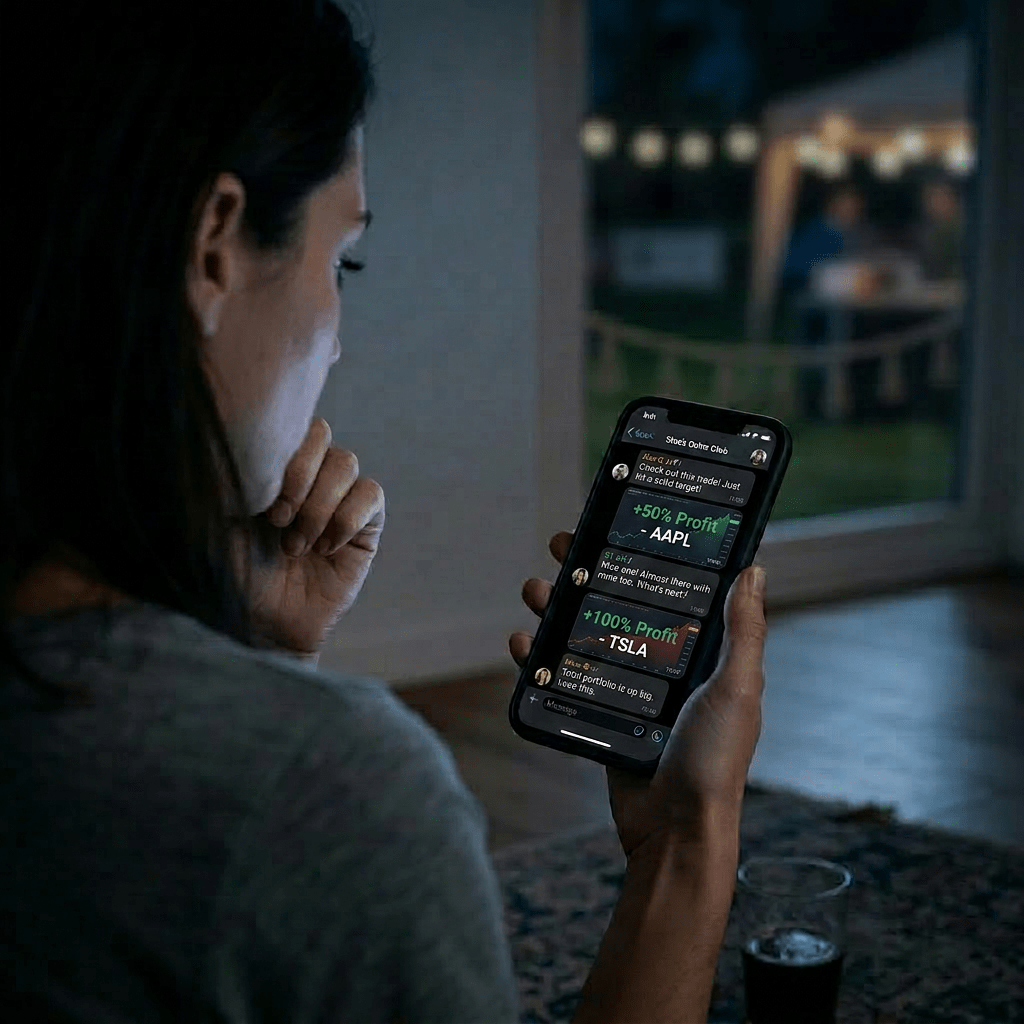
FOMO rarely shows up alone, it usually walks in with a crowd. You don’t want to miss out from the group. Someone online posts a screenshot of a 50% gain, and suddenly your perfectly good plan feels boring. You want money now! Sound familiar? Reddit, FINTWIT, Discord servers, finance influencers, they’re all designed to grab attention, and attention is the enemy of patience. It’s worth asking yourself: would I take this trade if I hadn’t seen anyone else post about it? If the answer is no, that’s your FOMO talking, not your strategy. Avoiding notifications during market hours, or even just logging off the group chat until after the close, can do more for your discipline than any indicator ever will.
Reframe Missed Trades as Data, Not Regret
Chasing a trade you missed almost always ends worse than just letting it go. Ironic, right? The move that got away starts to feel personal, like the market owes you a second chance. It doesn’t. Instead of mourning the missed setup, log it. What was the trigger? Did the entry criteria actually align, or did it just look good in hindsight? Treating missed trades as backtesting material instead of regret takes the sting out of them. Over time, this shift changes the whole emotional charge behind FOMO, because you stop seeing missed opportunities as losses and start seeing them as free information about your own patterns.
Conclusion
FOMO isn’t a character flaw — it’s just your brain doing what brains do when it sees other people winning. But here’s the thing: the market will always offer another setup. Always. The traders who last aren’t the ones who catch every move; they’re the ones who stick to their plan, size positions sensibly, and let missed trades roll off their back. Start with just one of the methods mentioned in this article today — maybe it’s muting that trading Discord, maybe it’s writing your entry rules down for the first time. Small changes compound. Master your FOMO, and you’ll trade with a clarity most people never find.


Leave a comment